
What is EMDR? The Science of Trauma & Rapid Healing

Updated: Dec 2, 2025

Eye Movement Desensitisation and Reprocessing (EMDR) is widely considered one of the most significant breakthroughs in mental health treatment of the last 30 years.
Endorsed by the World Health Organization (WHO) and the National Institute for Health and Care Excellence (NICE), EMDR is no longer just a therapy for war veterans. It is now a frontline treatment for anxiety, phobias, and complex trauma.
For therapists and medical professionals, understanding the mechanics of EMDR, specifically the Adaptive Information Processing (AIP) model, is essential for modern practice.
How EMDR Works: The Brain on Trauma
To understand EMDR, we must first understand how memory works.
In a healthy brain, new experiences are processed, filed away, and connected to existing memories. This is called Adaptive Information Processing (AIP).
However, when a traumatic event occurs, such as a car accident or a sudden bereavement, the brain's processing system becomes overwhelmed. The memory is not "filed away". Instead, it gets "stuck" in the limbic system in its raw, unprocessed form.
The Result: Years later, a sound or smell can trigger the original fight-or-flight response. The brain literally thinks the trauma is happening now.
The Cure: EMDR acts as a "metabolic kickstart". Using Bilateral Stimulation (moving eyes left and right), we bridge the gap between the emotional brain (Amygdala) and the logical brain (Prefrontal Cortex). This allows the trapped memory to be finally processed and stored as a neutral event.
A Brief History: The Walk in the Park
EMDR was discovered in 1987 by American psychologist Dr Francine Shapiro. While walking in a park, she noticed that her own distress regarding a negative memory decreased when her eyes moved rapidly back and forth.
She theorised that the eye movements were linked to the desensitisation of the emotional charge. This led to the development of the rigorous 8-phase protocol we use today. Initially met with scepticism, EMDR is now one of the most researched psychotherapies in the world, with over 30 randomised controlled trials demonstrating its efficacy.
The 8 Phases of EMDR Therapy
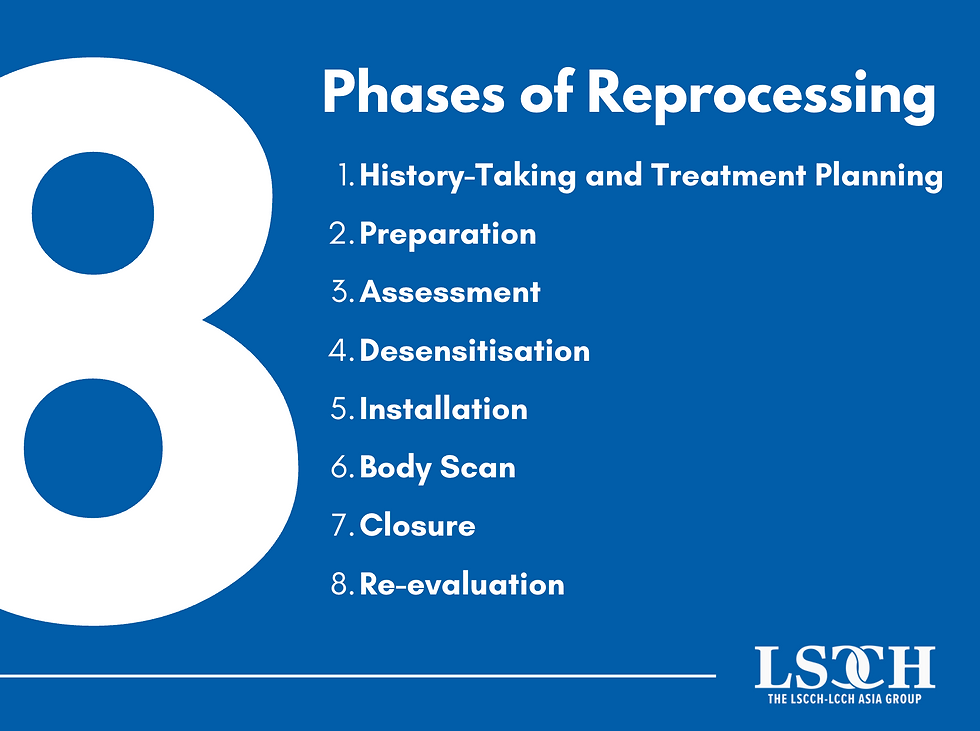
EMDR is not just "waving a finger" in front of a client's face. It is a rigorous, eight-phase clinical protocol.
Phase 1: History Taking
The therapist maps the "target memories", which are the specific events driving the client's current symptoms.
Phase 2: Preparation (Resourcing)
Before trauma work begins, the client must be stable. We teach grounding techniques, which are similar to Clinical Hypnosis anchors, to ensure the client can handle emotional distress.
Phase 3-6: Assessment & Desensitisation
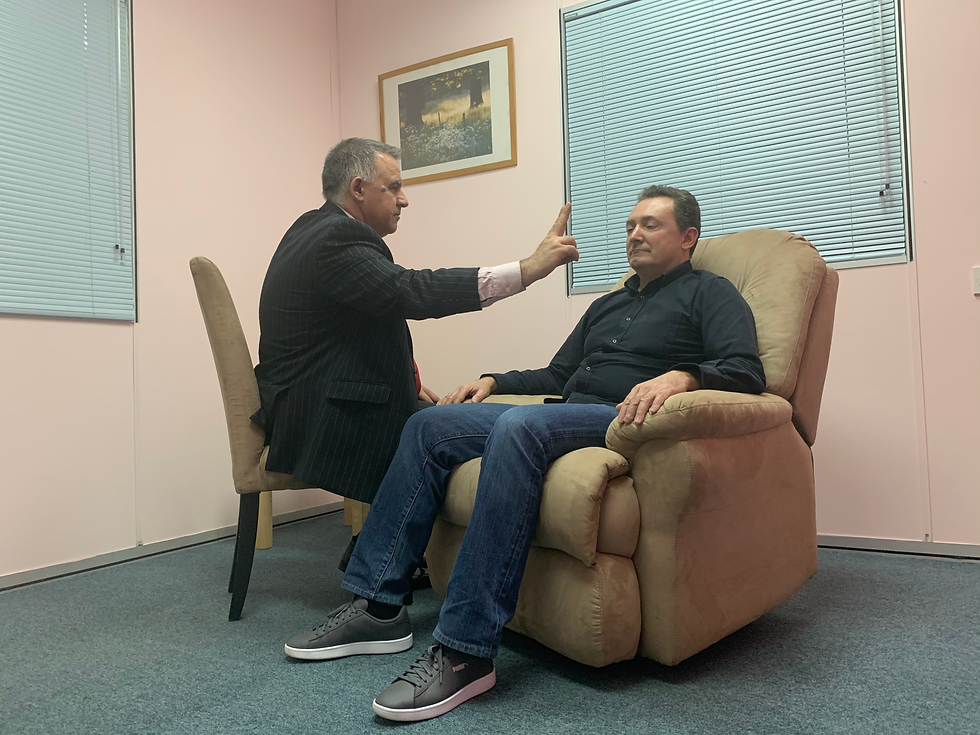
This is the active phase. The client focuses on the traumatic image while tracking the therapist's finger (or auditory tones).
The Goal: To reduce the Subjective Units of Disturbance (SUDs) from a 10 (maximum distress) to a 0.
The Mechanism: This mimics REM sleep patterns to facilitate rapid neural integration.
Phase 7-8: Closure & Re-evaluation
This ensures the client leaves the session grounded. It also involves checking for residual trauma in the following session.
What Happens in a Typical Session?
If you are new to EMDR, the process can seem unusual compared to traditional talk therapy.
Here is what to expect during the processing phase:
No "Retelling" Required: Unlike CBT or counselling, you do not have to discuss the graphic details of your trauma. You only need to hold the image of the event in your mind.
The Sets: The therapist will ask you to focus on the image and a negative belief (e.g., "I am powerless") while following their fingers with your eyes for 15 to 30 seconds.
The Break: You will stop, take a deep breath, and report what came up. It might be a new memory, a physical sensation, or an emotion.
Repeat: This process repeats until the memory causes zero distress.
EMDR vs Clinical Hypnosis: A Powerful Combination
At the LSCCH, we are often asked: "What is the difference between EMDR and Hypnotherapy?"
While they are distinct modalities, they share a neurological kinship.
Both utilise a state of focused attention to access the subconscious mind.
Hypnosis uses language patterns to calm the amygdala and suggest new behaviours.
EMDR uses biological mechanisms (eye movements) to physically re-process old data.
The "Power Combo": Many advanced practitioners combine both. They use Hypnosis for "Resourcing" (building safety) and EMDR for "Processing" (clearing trauma). This integrated approach is often faster and more effective than talk therapy alone.
Who Can Benefit from EMDR?
While famous for treating PTSD, clinical research supports EMDR for a wide range of conditions:
Anxiety & Panic Disorders: Reprocessing the "first panic attack" to stop the cycle of fear.
Phobias: Desensitising the trigger object, such as spiders or flying.
Chronic Pain: Addressing the somatic memory of injury.
Grief: Processing "stuck" points in the bereavement process.
Is EMDR Safe? Side Effects and Considerations
EMDR is a safe, non-invasive therapy with no use of drugs.
However, because it involves processing intense emotions, some clients may experience:
Vivid Dreams: As the brain continues to process information after the session.
Emotional Sensitivity: Feeling "raw" or emotional for 24 hours post-session.
This is why LSCCH training places such a heavy emphasis on Phase 2 (Preparation). We ensure every therapist knows how to resource their client safely before opening any traumatic memory channels.
Why Train in EMDR?
For medical and mental health professionals, adding EMDR to your portfolio is transformative.
Speed: EMDR often resolves single-event trauma in as few as 3 to 6 sessions.
Evidence-Based: It is one of the few therapies recommended by the NHS for trauma.
Less Burnout: Unlike talk therapy, you do not need to carry the weight of the client's detailed story. The brain does the healing.
Ready to upgrade your clinical toolkit? Our comprehensive EMDR training is designed for Hypnotherapists, Counsellors, and Medical Professionals.


Comments